WETT Floor Protection
Proper floor protection is an important part of a safe wood-burning appliance installation. A wood stove, fireplace or other solid-fuel-burning appliance can expose nearby combustible flooring to heat, sparks and burning embers. The hearth or floor protection is designed to reduce these risks.
The type and size of protection required can vary depending on the appliance, its certification and the manufacturer's installation instructions. During a WETT inspection, the floor protection is examined as part of the overall installation.
Why Floor Protection Is Important
Floor protection helps protect combustible flooring from sparks, embers and heat produced by a wood-burning appliance. Without adequate protection, materials such as hardwood, laminate, carpet and vinyl may be exposed to conditions that can create a fire hazard.
Some appliances require protection primarily from sparks and embers, while others may require additional thermal protection from heat transferred through the bottom of the appliance. The requirements depend on the appliance design, certification and manufacturer’s installation instructions.
During a WETT inspection, the hearth or floor protection is examined for its size, material, condition and relationship to the appliance. Any visible concerns are documented as part of the inspection.
Floor Protection Requirements
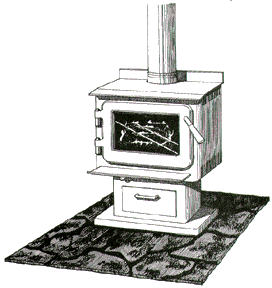
The floor protection required for a wood-burning appliance depends on the appliance design, certification and manufacturer’s installation instructions. The protection must extend sufficiently around the appliance to protect combustible flooring from sparks, embers and heat.
Certified appliances should be installed according to the requirements specified for that particular appliance. For older or uncertified appliances, additional requirements may apply when determining the appropriate floor protection.
During a WETT inspection, the floor protection is checked for adequate coverage, suitable materials and visible damage or deterioration. Combustible flooring should not be exposed in areas where protection is required.
Floor Protection Materials
Floor protection should be constructed from suitable non-combustible materials and provide the level of protection required for the appliance. Common materials may include tile, stone, brick, concrete or manufactured stove-board products designed for use beneath solid-fuel-burning appliances.
Some installations require protection from sparks and embers, while others require additional thermal protection to reduce heat transfer to combustible flooring below. A non-combustible surface by itself does not necessarily provide adequate thermal protection.
For a certified wood stove, the appliance certification and manufacturer's installation instructions are used to determine the required floor protection. For an uncertified wood stove, floor protection is determined using the applicable requirements of CSA B365, which include different protection requirements depending on the clearance between the bottom of the appliance and the combustible floor.
During a WETT inspection, the floor protection is examined for its construction, coverage, condition and suitability for the appliance being inspected.
Certified vs. Uncertified Wood Stoves
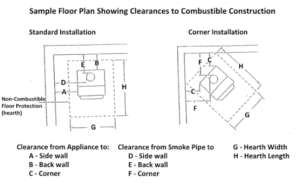
Common Floor Protection Defects
Floor protection defects are commonly found when wood stoves have been replaced, moved or installed without following the requirements for the particular appliance. The protection may be too small, constructed from unsuitable materials or fail to provide the required thermal protection.
Other concerns can include combustible flooring exposed within the required protected area, cracked or damaged materials, gaps in the protection, and combustible trim or floor coverings extending too close to the appliance.
For uncertified wood stoves, the height of the appliance above the combustible floor can affect the type of protection required under CSA B365. During a WETT inspection, the existing floor protection is evaluated in relation to the appliance and its applicable installation requirements.
Floor protection is only one part of a complete wood-burning system inspection. Learn more about our WETT Inspections Barrie service and what is examined during an inspection.
Call or Email to Book Your WETT Inspection
The Barrie Home Inspector is available 7 Days a Week for your convenience.
Inspection Areas
Barrie • Alliston • Angus • Innisfil • Wasaga Beach • Orillia • Midland • Penetanguishene