Flue Pipe Inspections - Barrie WETT Inspector
The flue pipe connects a wood stove to the chimney and is an important part of a safe wood-burning system. It carries combustion gases from the appliance to the chimney and must be properly installed, supported and maintained with appropriate clearances from combustible materials.
During a WETT inspection, accessible flue-pipe components are examined for their installation, connections, clearances and overall condition. Signs of corrosion, damage, improper connections or other visible defects may indicate that repairs or further evaluation are required.
Flue Pipe Installation
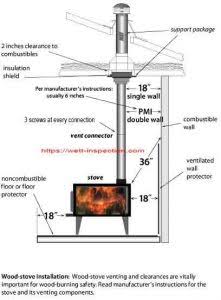
Proper flue pipe installation is essential for safely carrying combustion gases from the wood stove to the chimney. The pipe should be securely connected and supported, with joints properly assembled to help prevent smoke and combustion gases from escaping into the home.
The flue pipe should follow an appropriate route to the chimney and should not pass through combustible walls, ceilings or other concealed spaces unless an approved system designed for that purpose is used.
Interior stove pipe (single-wall or double-wall) connects to the thimble on the inside of the room. However, only Class A high-temperature insulated chimney pipe can physically pass through the wall thimble to the outside. You must match the thimble brand exactly to your Class A pipe brand (do not mix and match components)
During a WETT inspection, the visible flue pipe installation is examined for its configuration, connections, support and relationship to surrounding combustible materials.
Flue Pipe Clearances to Combustible Materials
Proper flue pipe installation is essential for safely carrying combustion gases from the wood stove to the chimney. The pipe should be securely connected and supported, with joints properly assembled to help prevent smoke and combustion gases from escaping into the home. The flue pipe should follow an appropriate route to the chimney and should not pass through combustible walls, ceilings or other concealed spaces unless an approved system designed for that purpose is used. Interior stove pipe, whether single-wall or double-wall, connects to the thimble on the inside of the room. Only Class A high-temperature insulated chimney pipe passes through the wall thimble to the exterior. The thimble and chimney components must be compatible with the Class A chimney system and components from different manufacturers should not be mixed. During a WETT inspection, the visible flue pipe installation is examined for its configuration, connections, support and relationship to surrounding combustible materials. That keeps the technical distinction you made between interior stove pipe and Class A chimney pipe, but reads more smoothly for the website.
.
Flue Pipe Joints & Connections
Flue pipe joints and connections should be securely assembled to maintain a continuous path for smoke and combustion gases to reach the chimney. Loose, damaged or improperly assembled connections can allow smoke and gases to escape into the home.
During a WETT inspection, visible joints are examined for proper assembly, secure connections and signs of deterioration or damage. Connections at the wood stove and chimney are also inspected for visible defects that could affect the safe operation of the system.
Flue Pipe Condition & Damage
Flue pipes can deteriorate over time from heat, moisture, corrosion and normal use of the wood-burning appliance. Rust, holes, cracks, loose sections or other physical damage can affect the ability of the flue pipe to safely contain smoke and combustion gases.
During a WETT inspection, accessible sections of the flue pipe are examined for corrosion, deterioration, physical damage and signs of overheating. Any visible defects that could affect the safe operation of the system are documented in the inspection report.
Creosote & Flue Pipe Deposits
Creosote and other combustion deposits can accumulate inside a flue pipe as a wood-burning appliance is used. Excessive buildup can restrict the passage of combustion gases and increase the risk of a chimney fire.
During a WETT inspection, accessible portions of the flue pipe are examined for visible signs of creosote accumulation and other deposits. Where significant buildup is observed, cleaning by a qualified chimney professional may be recommended before the appliance is used.
Flue Pipe Connections Through Walls
Where a flue pipe connects to a chimney through a combustible wall, a properly installed thimble provides the required protection at the connection. The thimble and surrounding installation must provide appropriate separation and protection from the heat produced by the flue pipe.
During a WETT inspection, the thimble, flue pipe connection, clearances and surrounding combustible materials are examined for visible installation concerns, deterioration or damage.
More WETT Inspection Information
For more information about wood-burning appliances and WETT inspections, visit our WETT Inspections Barrie page. You can also learn more about Wood Stove Floor Protection, including requirements for protecting combustible flooring around wood-burning appliances.
Common Concrete Foundation Cracks
Call or Email to Book Your WETT Inspection
The Barrie Home Inspector is available 7 Days a Week for your convenience.
Inspection Areas
Barrie • Alliston • Angus • Innisfil • Wasaga Beach • Orillia • Midland • Penetanguishene