
Protect Your Basement From Flooding
Basement flooding can cause extensive damage to your home and belongings. Proper grading, foundation drainage, sump pumps and other moisture-control measures can help reduce the risk of water entering your basement. Understanding how these systems work — and recognizing potential problems before they lead to water damage — is an important part of protecting your home.
Wet Basements – Flooding & Prevention
Water can enter a basement in several ways, including through foundation cracks, poorly sealed openings, inadequate drainage and water collecting around the exterior of the foundation. Heavy rain and melting snow can quickly expose weaknesses in these areas.
Many wet basement problems can be prevented by controlling water before it reaches the foundation. Proper grading, functioning eavestroughs and downspouts, foundation drainage and a reliable sump pump all play an important role in keeping a basement dry.
During a home inspection, visible signs of previous or current moisture problems can help identify areas that may require maintenance, repair or further investigation.
Causes of Wet Basements
Water problems in basements are often caused by conditions outside the home. Poor grading can direct rainwater and melting snow toward the foundation instead of away from it. Clogged eavestroughs, short downspouts and poorly drained window wells can also allow large amounts of water to collect beside foundation walls.
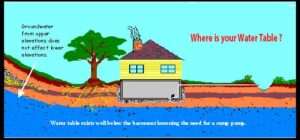
Foundation cracks, failed waterproofing, damaged drainage systems and improperly sealed openings can provide paths for water to enter the basement. In some homes, a high water table or saturated soil can also create hydrostatic pressure against the foundation and basement floor.
Finding the source of the moisture is important because simply repairing the visible interior damage may not correct the underlying problem.
Foundation Drainage
A properly installed foundation drainage system helps prevent groundwater from building up around the foundation. Perforated drainage pipe, commonly called weeping tile, is installed around the footings and surrounded by free-draining material to collect water and carry it away from the foundation.
Depending on the home, the drainage system may discharge by gravity or direct water to a sump pit where a pump removes it from the building. If the drainage system becomes damaged, blocked or overwhelmed, water can accumulate against the foundation and increase the possibility of basement leakage.
Older homes may have drainage systems that have deteriorated or become partially blocked over time. Maintaining proper surface drainage around the home reduces the amount of water the foundation drainage system has to handle.
Sump Pumps & Backup Systems
A sump pump helps protect the basement by removing water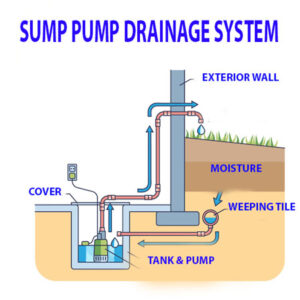 collected by the foundation drainage system. Water enters the sump pit and, when it reaches a predetermined level, the pump automatically turns on and discharges the water safely away from the foundation.
The sump pit should have a secure cover, and the pump and discharge piping should be checked periodically to ensure they are operating properly. The discharge should terminate where water will flow away from the house rather than returning toward the foundation.
Because sump pumps depend on electricity, a battery backup sump pump or other backup system can provide additional protection during a power failure or if the primary pump stops working. This can be especially important during severe storms, when power outages and high groundwater levels can occur at the same time.
Window Wells & Drainage
Window wells help keep soil away from basement windows and allow light into below-grade areas. However, if they are poorly drained or installed too low, they can collect rainwater and melting snow directly against the window.
The top of the window well should extend above the surrounding grade, and the ground around it should slope away from the foundation. Where a window well drain is connected to the foundation weeping tile and sump system, the drain opening should be protected with a suitable cap or surrounded with clean stone to help prevent soil and debris from entering and blocking the drain.
Leaves, debris and snow should be removed from window wells regularly. A poorly maintained window well can fill with water and allow it to enter around the window frame or, in severe cases, through the window itself.
Proper grading around a home is one of the simplest and most effective ways to reduce the risk of basement water problems. The ground should slope away from the foundation so rainwater and melting snow naturally flow away from the house rather than collecting beside the foundation walls.
Eavestroughs and downspouts also play an important role in controlling surface water. They should be kept clear of debris, and downspouts should discharge far enough from the foundation that water does not simply soak back into the soil beside the house.
Over time, soil around a foundation can settle and create low areas where water collects. Landscaping, patios, walkways and driveways can also direct water toward the home if they are improperly sloped. These conditions should be corrected to help keep water away from the foundation and reduce the load on the foundation drainage system.
Exterior Grading & Drainage
Proper grading around a home is one of the simplest and most effective ways to reduce the risk of basement water problems. The ground should slope away from the foundation so rainwater and melting snow naturally flow away from the house rather than collecting beside the foundation walls.
Eavestroughs and downspouts also play an important role in controlling surface water. They should be kept clear of debris, and downspouts should discharge far enough from the foundation that water does not simply soak back into the soil beside the house.
Over time, soil around a foundation can settle and create low areas where water collects. Landscaping, patios, walkways and driveways can also direct water toward the home if they are improperly sloped. These conditions should be corrected to help keep water away from the foundation and reduce the load on the foundation drainage system.
Foundation Waterproofing
Foundation waterproofing helps prevent moisture in the surrounding soil from passing through foundation walls and entering the basement. Modern foundation systems may include waterproofing or damp-proofing materials together with a drainage membrane that directs water downward toward the footing drainage system.
Waterproofing is most effective when combined with proper grading and a functioning foundation drainage system. Even a well-protected foundation can develop moisture problems if large amounts of surface water are continually allowed to collect beside the house.
Cracks, damaged waterproofing materials and improperly sealed openings for pipes or other services can provide paths for water to enter. When leakage occurs, correcting the source of the water on the exterior is generally preferable to simply covering or repairing the visible damage on the basement interior.
Basement Moisture & Condensation
Not all basement moisture is caused by water leaking through the foundation. Warm, humid air can condense on cool basement walls, floors, plumbing pipes and other surfaces, particularly during the summer months. This can create damp conditions even when there is no active foundation leak.
High basement humidity can contribute to musty odours, deterioration of building materials and mould growth. Using a dehumidifier, providing adequate ventilation and controlling sources of excess moisture can help maintain appropriate humidity levels.
Determining whether moisture is caused by condensation, surface water, groundwater or an actual foundation leak is important before repairs are undertaken. Correcting the source of the moisture is more effective than simply covering or refinishing the affected area.
Call or Email to Book Your Home Inspection
The Barrie Home Inspector is available 7 Days a Week for your convenience.
Inspection Areas
Barrie • Alliston • Angus • Innisfil • Wasaga Beach • Orillia • Midland • Penetanguishene