
Concrete Foundation Construction
A concrete foundation provides the structural support for a home and transfers the weight of the building to the soil below. Most modern homes with basements use poured concrete foundation walls supported by concrete footings.
Properly constructed footings and foundation walls create a continuous support system for the floors, walls and roof above. The size and design of the foundation depends on the building loads, soil conditions and the construction of the home.
Concrete is extremely strong in compression but can develop cracks as it cures, shrinks and responds to movement in the surrounding soil. While many foundation cracks are minor, some cracking or movement can indicate conditions that deserve closer examination during a home inspection.
Common Concrete Foundation Cracks
Cracks are commonly found in poured concrete foundation walls. Concrete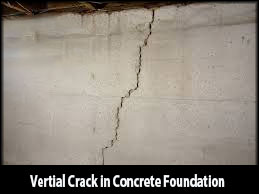 contains water when it is placed, and as the concrete cures and dries it naturally shrinks. This shrinkage can produce cracks even when the foundation remains structurally sound.
Vertical and diagonal cracks are frequently associated with normal concrete shrinkage or minor settlement. The width of the crack, whether the two sides have moved in relation to each other, and evidence of continuing movement are more important than simply finding a crack.
Foundation cracks can also provide a path for water to enter a basement. A crack that is not structurally significant may still require repair if moisture is entering through it. Water staining, mineral deposits or previous crack repairs can provide clues that leakage has occurred.
Not every foundation crack has the same cause or significance. The location, direction, width and amount of displacement should all be considered along with the surrounding foundation and site conditions.
Types of Foundation Cracks and Possible Causes
Foundation cracks can develop for several reasons, and the direction and appearance of a crack can provide useful information about what may have caused it. However, the appearance of a crack alone does not always determine whether a structural problem exists.
Vertical Cracks: Vertical cracks are commonly found in poured concrete foundation walls and are often associated with shrinkage as the concrete cures. Narrow vertical cracks with little or no displacement are common, although they can sometimes allow water to enter the basement.
Diagonal Cracks: Diagonal cracks may be associated with shrinkage or differential settlement. When one portion of a foundation moves differently from another, stresses can develop in the concrete and produce diagonal cracking. The amount of movement and displacement should be considered when evaluating these cracks.
Horizontal Cracks: Horizontal cracking deserves particular attention because it can be associated with pressure against the exterior of the foundation wall. Soil expansion, frost and excessive water pressure can place lateral loads on a foundation wall and may cause it to crack or move inward.
Cracks with Displacement: When the concrete on one side of a crack is no longer aligned with the concrete on the other side, movement has occurred. The amount and direction of displacement, along with other visible conditions, can help determine whether further evaluation is appropriate.
The age of the home, drainage conditions, soil conditions and evidence of previous repairs should all be considered when examining foundation cracks. Significant movement or conditions that cannot be adequately evaluated during a visual home inspection may require further assessment by a qualified professional.
Water, Moisture and Efflorescence on Foundation Walls
Water around a foundation can create several problems. Poor grading, leaking downspouts, inadequate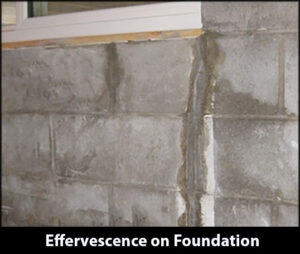 drainage and saturated soil can allow water to collect beside foundation walls. Water may then enter through cracks, construction joints or other openings in the foundation.
Moisture entering through concrete can sometimes leave a white, powdery or crystalline deposit on the surface of the foundation wall. This material is called efflorescence. It forms when water moving through concrete or masonry dissolves naturally occurring salts and carries them to the surface. When the water evaporates, the mineral deposits remain behind.
Efflorescence itself does not normally damage the foundation, but it can be evidence that moisture has been moving through the concrete. The source of the moisture should therefore be considered, particularly when staining, dampness or other signs of water entry are also present.
Managing water outside the home is an important part of protecting a concrete foundation. Proper grading, functioning eavestroughs and downspouts, and an effective foundation drainage system help direct water away from the building and reduce pressure against foundation walls.
Foundation Problems Found During Home Inspections
With more than 20 years of experience and over 9,000 professional home inspections, The Barrie Home Inspector has inspected concrete foundations in homes of many different ages and construction types. Recognizing the difference between common concrete cracking and conditions that may require further investigation is an important part of a professional home inspection.
For examples of problems discovered during actual home inspections, see my Home Inspection Defects Gallery.
Call or Email to Book Your Home Inspection
The Barrie Home Inspector is available 7 Days a Week for your convenience.
Inspection Areas
Barrie • Alliston • Angus • Innisfil • Wasaga Beach • Orillia • Midland • Penetanguishene