WETT Inspection Information
WETT inspection information can help homeowners and home buyers better understand the safe installation and operation of wood-burning appliances. A WETT inspection examines accessible components of wood stoves, fireplaces and other solid-fuel-burning systems for visible installation and safety concerns.
This page provides information about wood-burning appliances, chimneys, clearances, floor protection and other components commonly examined during a WETT inspection.
WETT Site Basic Inspection
A WETT Site Basic Inspection is a visual inspection of the readily accessible components of a wood-burning system. The inspection includes the solid-fuel-burning appliance, flue pipe, chimney and other visible components associated with the installation.
The inspection considers items such as clearances to combustible materials, floor protection, appliance condition, flue-pipe installation and the visible portions of the chimney system. Where available, appliance certification labels and manufacturer information may also be reviewed.
Following the inspection, a written report documents the system and any visible concerns identified at the time of the inspection.
Wood-Burning Appliances
Wood-burning appliances include wood stoves, fireplaces, fireplace inserts, pellet stoves and other solid-fuel-burning equipment. Each appliance must be installed with appropriate clearances, floor protection and a suitable chimney or venting system.
During a WETT inspection, the appliance is examined for its condition, installation, certification information and relationship to surrounding combustible materials. Certified appliances are evaluated using their certification and manufacturer’s installation requirements, while uncertified appliances are evaluated using the applicable installation requirements.
Visible damage, missing components, improper modifications or installation concerns are documented in the inspection report.
Chimneys & Venting Systems
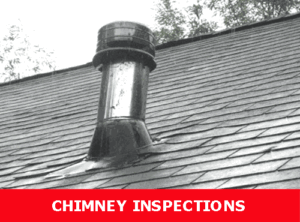
The chimney and venting system safely carries smoke and combustion gases from the wood-burning appliance to the exterior of the home. Chimneys may be constructed of masonry or approved factory-built components and must be suitable for the appliance they serve.
During a WETT inspection, accessible portions of the chimney and venting system are examined for condition, installation, clearances, connections and visible signs of deterioration or damage. Concerns may include damaged chimney components, improper connections, corrosion or excessive creosote accumulation.
The chimney termination and other readily accessible exterior components are also examined for visible conditions that could affect the safe operation of the system.
For more information about connector pipe installation and clearances, visit our Wood Stove Flue Pipes page.
Clearances to Combustible Materials
Wood-burning appliances must maintain adequate clearance from combustible materials such as wood framing, walls, ceilings, furniture and combustible finishes. Required clearances vary depending on the type of appliance, its certification and the manufacturer's installation instructions.
Clearance requirements also apply to components of the venting system, including flue pipes and chimneys. Where required clearances cannot be maintained, an approved shielding system may sometimes be used to reduce the required distance. The construction, spacing and installation of the shield are important because simply placing a non-combustible material against a combustible wall does not necessarily provide an acceptable clearance reduction.
During a WETT inspection, accessible clearances around the appliance and venting system are checked for conditions that could expose combustible materials to excessive heat. These clearances are particularly important because prolonged heating of nearby combustible materials can increase the risk of fire.
Floor Protection for Wood-Burning Appliances
Proper floor protection helps protect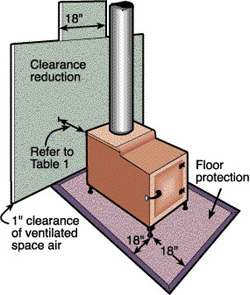 combustible flooring from sparks, embers and heat produced by a wood-burning appliance. The type and extent of protection required depends on the appliance, its certification and the manufacturer’s installation instructions.
Certified wood stoves are installed according to their certification and manufacturer requirements. For uncertified appliances, applicable CSA B365 requirements are used to determine suitable floor protection, including requirements that can vary depending on the clearance between the bottom of the appliance and the combustible floor.
During a WETT inspection, the size, construction, condition and coverage of the floor protection are examined for visible installation concerns.
For more detailed information, visit our Wood Stove Floor Protection page.
Common WETT Inspection Defects
WETT inspections can identify defects or installation conditions that may affect the safe operation of a wood-burning system. Common concerns include inadequate clearances to combustible materials, insufficient floor protection, improper flue-pipe connections, damaged chimney components and deterioration caused by heat, corrosion or age.
Other concerns may include missing certification information, improper modifications, excessive creosote accumulation, damaged firebrick or components that are not compatible with the installed system.
Visible defects and installation concerns identified during the inspection are documented in the WETT inspection report.
For information about booking an inspection and what to expect, visit our WETT Inspections Barrie page.
Call or Email to Book Your WETT Inspection
The Barrie Home Inspector is available 7 Days a Week for your convenience.
Inspection Areas
Barrie • Alliston • Angus • Innisfil • Wasaga Beach • Orillia • Midland • Penetanguishene