Air Quality Testing
Indoor air quality is an important part of maintaining a healthy and comfortable home. Poor air quality can result from excess moisture, mould growth, inadequate ventilation and airborne contaminants that may not be immediately noticeable. **The Barrie Home Inspector** provides professional air quality testing services in Barrie and throughout Simcoe County to help homeowners, buyers and property managers investigate potential indoor air quality concerns. Identifying possible sources of contamination is an important first step toward improving the indoor environment and protecting your investment.
Common Causes of Poor Indoor Air Quality
Poor indoor air quality can be caused by a variety of conditions, including excessive humidity, water leaks, mould growth, inadequate ventilation and airborne particles. Older homes may also contain building materials that release dust or other contaminants into the living environment. Everyday activities such as cooking, cleaning and operating heating equipment can contribute to indoor air pollution. During a home inspection, signs of moisture intrusion, poor ventilation and other building deficiencies may help identify conditions affecting indoor air quality. Professional air quality testing can provide additional information when contamination is suspected.
Signs of Indoor Air Quality Problems
Signs of poor indoor air quality may include persistent musty odours, visible mould growth, condensation on windows, excessive humidity and unexplained dust accumulation. Occupants may also experience irritation of the eyes, nose or throat, headaches or respiratory discomfort, although these symptoms can have many different causes. Water stains on ceilings, walls or flooring may indicate hidden moisture problems that could contribute to mould growth. Identifying these warning signs and investigating their underlying causes can help determine whether professional air quality testing or further investigation is necessary.
Mould and Indoor Air Quality
Mould growth is one of the most common concerns associated with poor indoor air quality. Mould can develop when moisture accumulates in basements, attics, crawlspaces, bathrooms or behind finished walls. Plumbing leaks, foundation seepage, roof leaks and inadequate ventilation can create conditions that encourage mould growth. Although visible mould and musty odours may indicate a problem, hidden contamination can be more difficult to identify. Air quality testing may help assess airborne mould spores, while a thorough inspection can help identify moisture sources contributing to the problem. Addressing the underlying moisture condition is essential to preventing mould from returning.

Air Quality Testing and Sampling
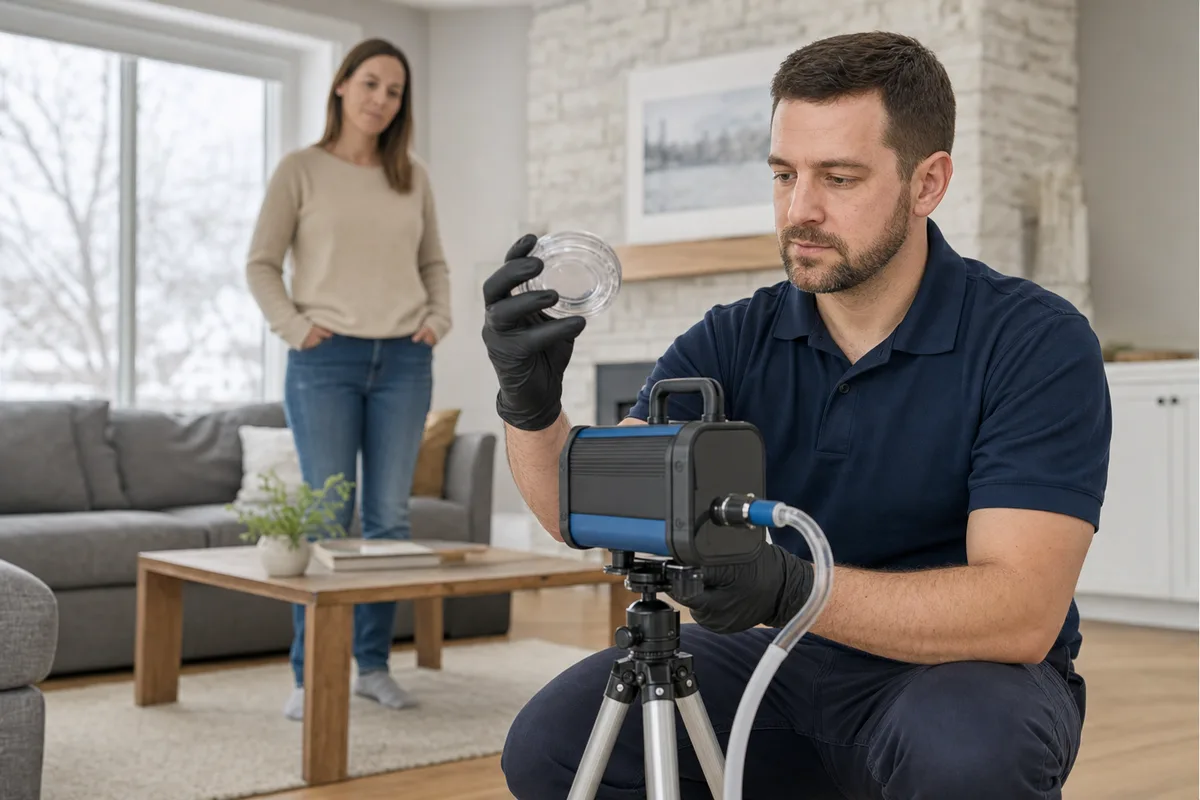
Professional air quality testing can help identify airborne contaminants that may affect the indoor environment of a home or building. Depending on the concerns identified, testing may involve collecting indoor air samples and comparing them with outdoor samples to evaluate airborne mould spore concentrations. Samples can be submitted to an accredited laboratory for analysis, providing information about the types and quantities of particles detected. Testing results should be considered alongside visible building conditions, moisture problems and ventilation deficiencies. Air sampling alone cannot identify every indoor air quality concern, but it can provide valuable information when investigating suspected contamination.

Please note that The Barrie Home Inspector does not provide testing for volatile organic compounds (VOCs), including chemical emissions from paints, adhesives, cleaning products and other household materials. Our air quality testing services focus on investigating suspected airborne mould contamination and related moisture concerns.
Moisture Problems and Indoor Air Quality
Excess moisture is one of the leading contributors to indoor air quality problems in residential buildings. Basement seepage, plumbing leaks, roof defects, condensation and inadequate ventilation can create damp conditions that encourage mould growth. Moisture may also accumulate in concealed areas, including wall cavities, attics and crawlspaces, where damage can develop without obvious warning signs. During a home inspection, thermal imaging and moisture detection equipment can help identify areas requiring further investigation. Correcting water intrusion, improving ventilation and controlling indoor humidity are important steps toward preventing mould growth and maintaining healthier indoor air quality.
When Should You Consider Air Quality Testing?
Air quality testing may be beneficial when a home has persistent musty odours, a history of flooding, previous water damage or suspected hidden mould growth. Homebuyers may also consider testing when purchasing a property with evidence of moisture intrusion or inadequate ventilation. Homeowners who have experienced basement leaks, plumbing failures or roof leaks may wish to investigate whether airborne mould spores are present. Testing can also be useful following mould remediation to help evaluate indoor conditions. While air sampling cannot guarantee that a building is free of mould, the results can provide valuable information to help homeowners make informed decisions about further investigation and corrective measures.
Air Quality Testing in Barrie & Simcoe County
The Barrie Home Inspector provides professional air quality testing services for homeowners, homebuyers and property managers throughout Barrie and Simcoe County, including Innisfil, Alliston, Orillia, Midland and Wasaga Beach. With over 20 years of home inspection experience, we understand how moisture intrusion, inadequate ventilation and building defects can contribute to indoor air quality concerns. Our services focus on investigating suspected airborne mould contamination and helping clients understand the conditions that may be affecting their property. Whether you are purchasing a home or investigating a potential mould problem, professional testing can provide valuable information to help you determine the next steps.
Understanding Your Air Quality Testing Results
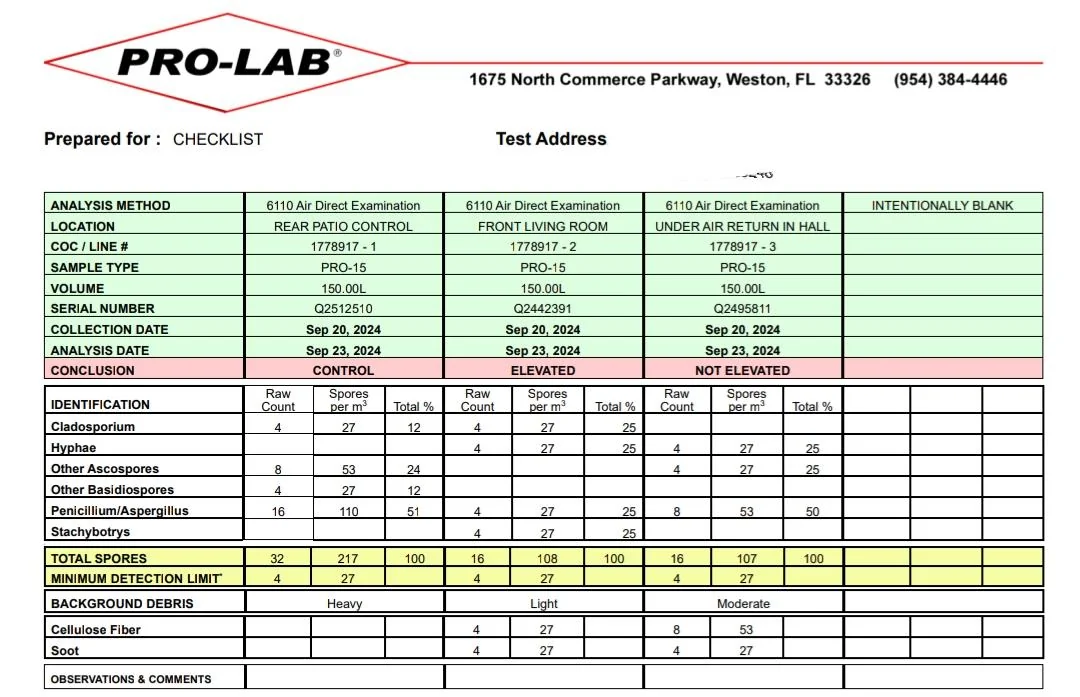
Air quality testing results provide information about the types and concentrations of airborne mould spores detected at the time of sampling. Laboratory reports may identify different mould spore categories and compare indoor concentrations with outdoor reference samples. Elevated indoor levels or significant differences between indoor and outdoor samples may indicate conditions that warrant further investigation. Results should be interpreted alongside the building's moisture history, visible conditions and ventilation characteristics. Because airborne mould concentrations can fluctuate with weather, occupancy and indoor activities, a single test represents conditions at the time of sampling rather than a guarantee of future air quality. Understanding these limitations helps homeowners make informed decisions about moisture control, further investigation and potential remediation.
Schedule Your Air Quality Testing
The Barrie Home Inspector is available 7 Days a Week for your convenience.
Inspection Areas
Barrie • Alliston • Angus • Innisfil • Wasaga Beach • Orillia • Midland • Penetanguishene